


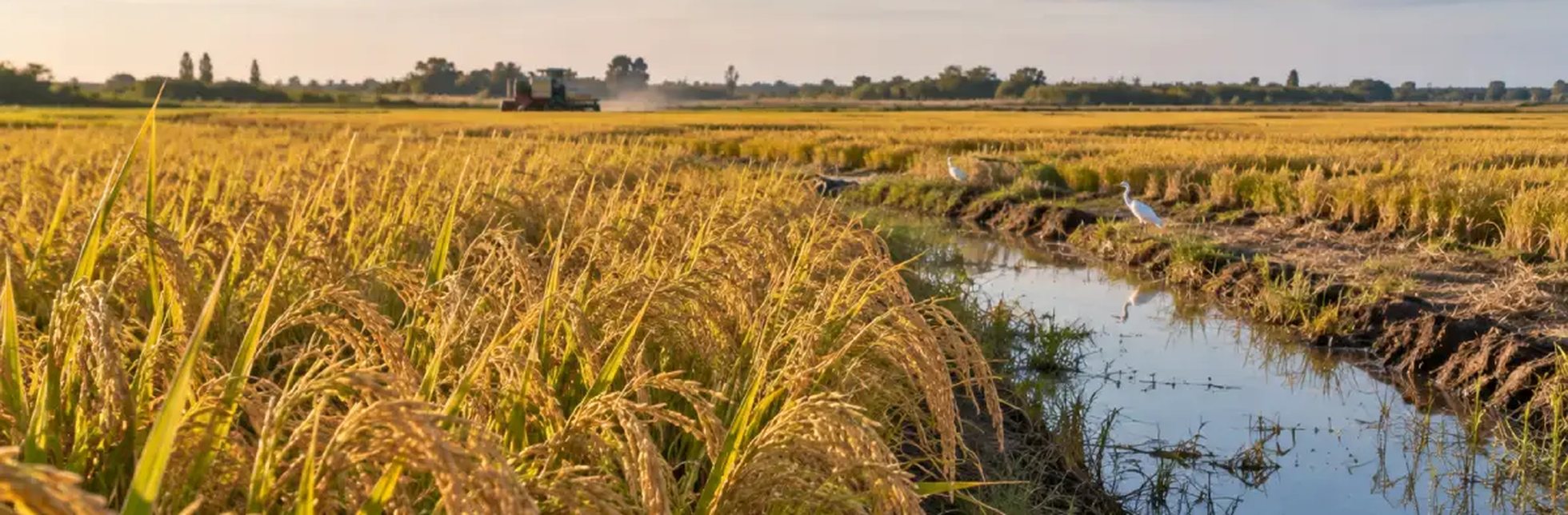
The Rhône Delta produces a type of rice that is unique in France: Camargue rice, which has been protected by a PGI designation since 2000. About 300 rice farmers grow it on some 12,000 hectares, between the Gard and Bouches-du-Rhône departments. From our campsite in the Camargue, Les Jardins de Tivoli, in Le Grau-du-Roi, you’re right at the gateway to this terroir.
Its history, its producers, its specialties, and the best places to enjoy an afternoon snack: here’s everything the delta is proud of.
Camargue rice in 5 points
| Key | What You Need to Know |
|---|---|
| Label | Camargue Rice PGI since 2000 |
| Area | Approximately 12,000 hectares of rice paddies each year |
| Producers | Nearly 300 rice farmers and 2,000 direct jobs |
| Production Area | Rhône Delta, between Aigues-Mortes, Tarascon, and Port-Saint-Louis-du-Rhône |
| Harvest | From September to October, celebrated in Arles during the Rice Festival |
A History Tied to Freshwater and Salt
The history of Camargue rice begins with a necessity: desalinating the delta’s lands. Tradition credits Henry IV and Sully with the first attempts at rice cultivation. In the 19th century, the construction of dikes along the Rhône revived rice cultivation, as irrigation water washed the salt from the soil and made the plots arable.
The real boom came after World War II. Thanks to the Marshall Plan, rice paddies rapidly expanded throughout the delta. After a more difficult period, a recovery plan was launched in 1981, breathing new life into the industry. As a result, according to the French Rice Center, by 1986 the Camargue was supplying one-third of the rice consumed in France.
Even today, rice farming plays an important role in both agriculture and the environment: it helps maintain the wetlands that you can admire from the roads in the delta.
Who grows Camargue IGP rice?
Nearly 300 family-run farms grow Camargue rice in the 15 municipalities of the IGP region, spread across the Gard and Bouches-du-Rhône departments. According to the French Rice Growers’ Association, the PGI designation obtained in 2000 guarantees a controlled origin and cultivation method.
The schedule follows the rhythm of the seasons. In the spring, rice farmers flood the fields and sow the seeds. In the summer, the shoots grow beneath a thin layer of water. Then, from September through October, the harvesters enter the golden fields.
In addition, more than 90% of production bears the IGP label, and more than 90% of French rice paddies are located in protected areas. The specifications cover several varieties: round-grain, medium-grain, long-grain, and extra-long-grain rice, available in white, brown, parboiled, or naturally fragrant varieties.
Good to know: Look for the yellow and blue IGP logo on the package, as well as the words “Riz de Camargue.” These two indicators certify that the rice actually comes from the Rhône Delta. Camargue red rice, recognizable by its brick-red color and nutty flavor, is also available from many producers. It pairs perfectly with grilled fish from the Gard coast.
Camargue Rice
Specialties
Camargue rice
is a staple in
all dishes from the delta, from slow-cooked meals to desserts. Its firm texture holds up well during cooking, which is why it plays such a prominent role in traditional recipes.
Here are the local specialties you should try during your stay:
- Gardianne de taureau, a red-wine stew, is almost always served with white Camargue rice.
- Red rice is served with fish and shellfish caught off the coast of Le Grau-du-Roi.
- Fresh and colorful whole-grain rice salads are a staple of summer meals on the terrace.
- Rice cake and rice pudding delight food lovers at dessert time.
- Rice beer, brewed from local rice, is a popular choice for an aperitif.
Gardianne, in particular, brings together two of the region’s flagship products : IGP rice and AOP “Taureau de Camargue” bull meat. A perfect pairing that perfectly captures the essence of the delta!
Where can you taste and discover Camargue rice?
Traditional restaurants throughout the Camargue—from Aigues-Mortes to Le Grau-du-Roi, including Les Saintes-Maries-de-la-Mer—serve Camargue rice daily, often as a side dish with gardianne. To learn more, several places offer insights into its cultivation:
- La Maison du Riz, in Albaron, opens its family farm to visitors by appointment and features a shop selling local products.
- The Camargue Museum, at Mas du Pont de Rousty, traces the agricultural history of the delta.
- The Rice Festival in Arles celebrates the new harvest every September with abrivados, concerts, and bodegas.
Our tip: Rent a bike at our campsite’s front desk and head out early in the morning to the rice paddies. The low-angle light on the flooded fields is a photographer’s delight, and herons gather there in large numbers to feed. On your way back, stop in Aigues-Mortes to enjoy a bowl of gardianne at one of the restaurants in the medieval town.
Why not taste Camargue rice right next to the rice paddies? Book your stay at Les Jardins de Tivoli, our 4-star campsite just 800 meters from the beaches of Le Grau-du-Roi, and discover the flavors of the delta.
FAQ – Your Questions About Camargue Rice
When is the Camargue rice harvest?
The Camargue rice harvest takes place
from September through October. Harvesters enter the rice fields once the grain has ripened, following planting in the spring. In Arles, the Feria du Riz celebrates the first fruits of this harvest every year in mid-September.
Why does rice grow in the Camargue?
Rice grows in the Camargue
thanks to the fresh water from the Rhône. The soils in the delta contain a lot of salt, and the irrigation of the rice paddies washes away this salt year after year. Rice farming therefore makes land arable that would otherwise be unsuitable for other crops.
How many farmers grow Camargue rice?
About 300 farmers
grow Camargue rice
on nearly 12,000 hectares. The industry accounts for nearly 2,000 direct jobs in the Rhône Delta, between the Gard and Bouches-du-Rhône departments.
Can you visit a rice paddy in the Camargue?
Yes, some farms are open to the public. For example, the Maison du Riz in Albaron organizes educational tours of its rice farm by appointment. From the roads through the delta, you can also freely admire the flooded rice paddies in the spring and summer.
Where can you buy Camargue IGP rice?
Camargue IGP rice is available at farmers’ markets, local markets, and supermarkets. To identify it, look for the IGP logo and the words “Riz de Camargue” on the packaging.
Sources :
- French Rice Center, History of Rice in the Camargue
- French Rice Growers’ Union and the Rice Industry, the “Riz de Camargue” PGI
- City of Arles, Rice Festival
- Maison du Riz, Farm Tour
AI-generated image