


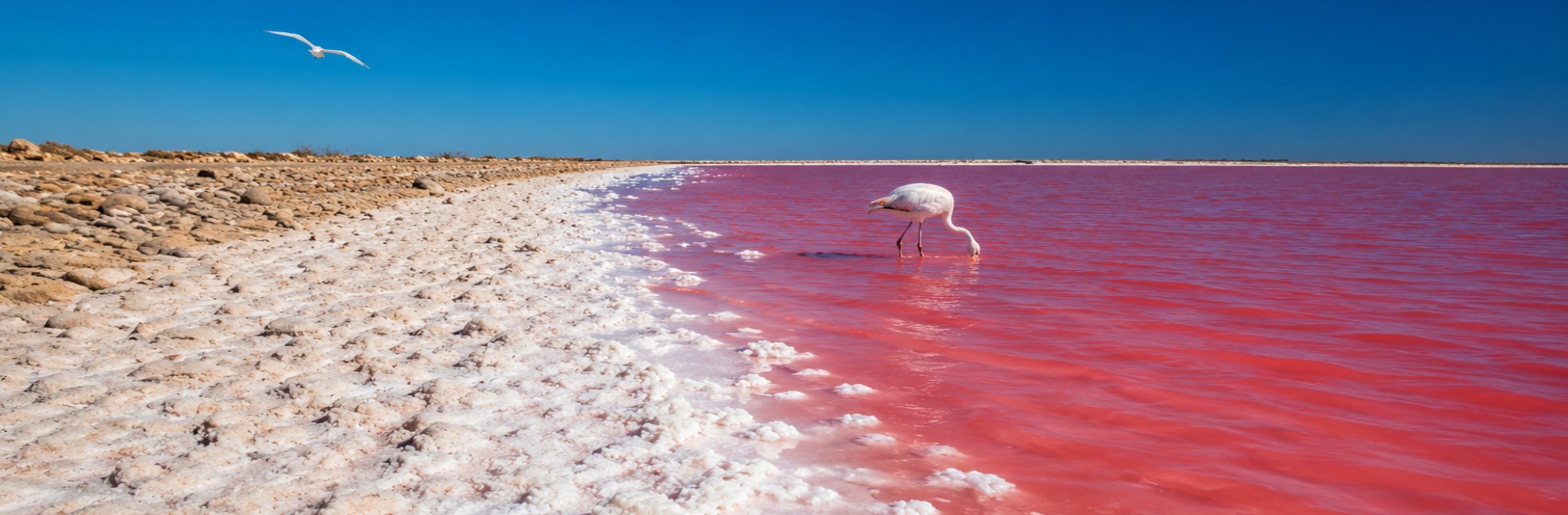
South of Arles, Salin de Giraud lives to the rhythm of 6,000 hectares of salt pans, colorful workers’ houses, and a 6-kilometer stretch of sandy beach. This part of the delta can be explored in a day from the Gard coast, 78 km from our campsite in the Camargue, Les Jardins de Tivoli.
Here you’ll find places to visit, actual distances, and tips for planning your trip so you don’t waste time once you’re there.
This Topic at a Glance
| Landmark | Data |
|---|---|
| Location | Southeast of the delta, in the municipality of Arles, on the right bank of the Grand Rhône |
| Distance from the Gard coastline | About 80 km via Arles, or a little over an hour’s drive |
| Area of the saltworks | 6,000 hectares of salt pans facing the mouth of the river |
| Annual production | 340,000 metric tons of salt, most of which is used for snow removal |
| Piémanson Beach | 6 km of fine sand west of the mouth of the Grand Rhône |
| Domaine de la Palissade | 700 hectares and 3 marked trails measuring 1.5 km, 3 km, and 7 km |
| Salt Harvest | September, when the white camels reach their full height |
A village born of salt and chemistry
Salin de Giraud is one of the youngest villages in Provence: its history began in 1855, when chemist Henri Merle purchased 8,000 hectares of marshland to supply his soda ash factory. Solvay followed suit in 1895 and used the local salt as the raw material for Marseille’s soap factories.
This dual industrial presence explains the village’s character. The Péchiney and Solvay workers’ housing estates welcomed Greeks, Armenians, Spaniards, and Italians who came to work in the salt flats, and their low-rise houses still line the main streets. The Camargue Regional Nature Park has also marked out a discovery trail, the Fil Rose, which recounts this working-class history. Local storytellers offer guided tours for €7 per person; the tour is free for children under 12.
The salt flats and their salt pans
The Giraud saltworks operates on 6,000 hectares near the mouth of the Grand Rhône and produces 340,000 metric tons of salt per year. Unlike the table salt from Aigues-Mortes, this salt is primarily used in the chemical industry and for deicing roads.
Harvesting takes place in September. The salt workers then gather the salt into huge white piles, a process known in the trade as “mise en camelle.” These “camelles” rise several meters high and are visible from a great distance, even from the road leading down to the beaches. Around them, the salt pans turn pink due to the action of microorganisms, a scene that attracts photographers and birdwatchers alike. The old salt marshes are home to Europe’s only nesting site for the greater flamingo.
Piémanson and La Palissade: The Wild Deep South
Once you pass the village, the road heads straight toward the sea and passes by two sites that alone are worth the trip.
Piémanson Beach
Piémanson stretches 6 km of fine sand to the west of the mouth of the Grand Rhône, with no buildings or levees in sight. Parking is available along the beach in designated areas, and lifeguards are on duty in July and August. Regulations prohibit campsites, bivouacking, and open fires, a rule that park rangers regularly enforce.
The Palissade Estate
Located between the village and the sea, this Conservatoire du littoral estate protects 700 hectares of unspoiled Camargue. Three marked trails—1.5 km, 3 km, and 7 km long—wind through reed beds and ponds, dotted with observation posts. Admission is €5 per person (free for children under 12), and the estate also offers horseback riding and kayaking on the Rhône.
Organize the day trip
It’s about 80 km from the Gard coastline, passing through Aigues-Mortes, Saint-Gilles, and then Arles—a little over an hour’s drive. The D36 departmental road then leads to the village, and the coastal road continues down to Piémanson. No other route crosses the Grand Rhône from the south, unless you take the Barcarin ferry to Port-Saint-Louis-du-Rhône.
Here are a few tips to make your day easier:
- Leave early in the morning in July and August, because the parking spaces in Piémanson fill up quickly.
- Be sure to bring water and a picnic, as most of the shops are located in the village.
- Pack some mosquito repellent in your bag—it’s a must-have at the end of the day near the ponds.
- Be sure to bring binoculars so you can watch the flamingos from the side of the road.
- Fill up on gas before leaving the coast, as gas stations are few and far between in the delta.
This excursion is a great complement to the other possible outings in the Camargue from our campsite, including trips to Aigues-Mortes, Espiguette, and the local cattle ranches.
Our team at Les Jardins de Tivoli sums up the outing in one sentence for our guests: “Set out at sunrise, and you’ll see the flamingos before it gets too hot, and you’ll have Piémanson Beach almost all to yourselves.”
Do you dream of days that combine wide-open wilderness with a trip back to the beach in the late afternoon? Book your stay at our campsite, just 800 meters from the beaches of Le Grau-du-Roi, and head south toward the delta the very next day after you arrive!
AI-generated image